
News
Panora’s videos, announcements and articles.
Life at Panora
Articles
Trusted AI agents for insurance brokerages
A large brokerage does not hand its files to an AI on the strength of a demo. It asks the questions a CIO and a compliance officer ask. Here are our answers, and why every action of a Panora agent is traced, auditable and replayable.
After its funding round, Panora is hiring
A funding round is not an end, it is a means. This one serves one purpose: to go faster. Product design, brokerage expertise, sales, engineering, data: five open roles to equip brokers better.
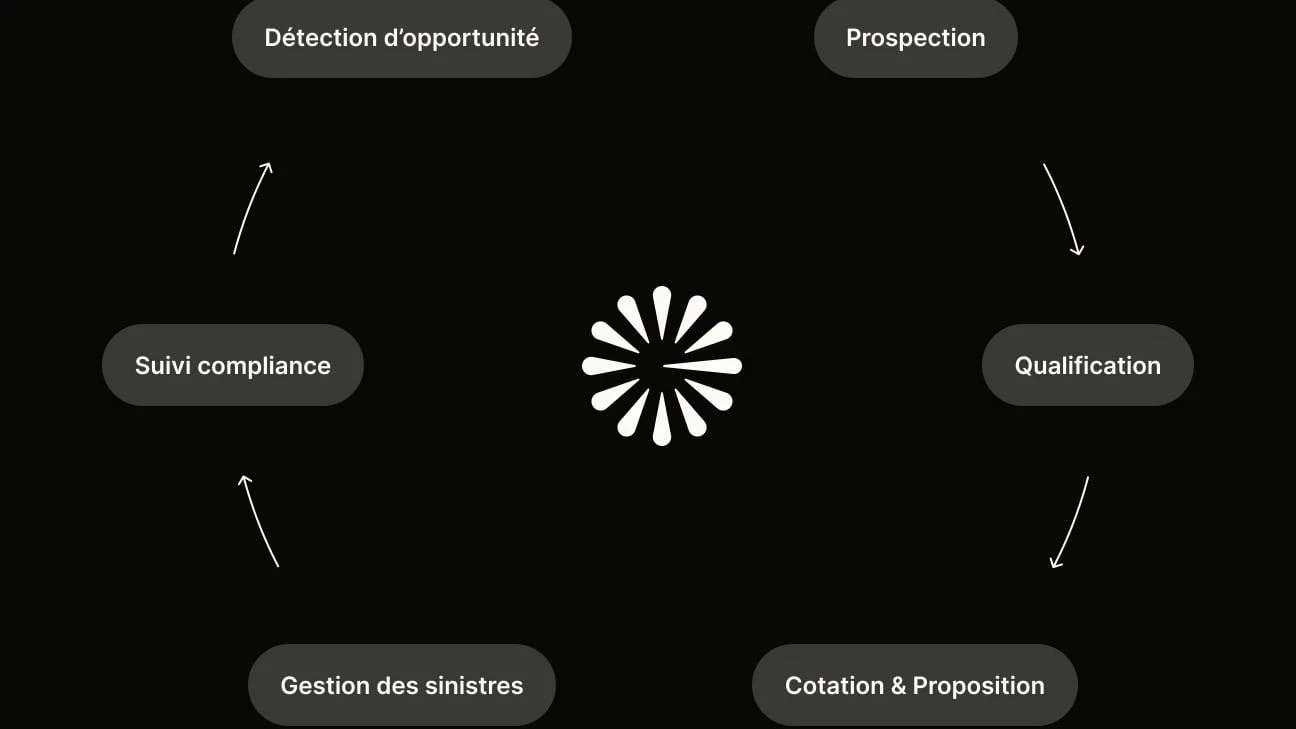
Panora’s mission: no more busywork for insurance brokers
A broker spends close to 70% of their time on data entry, document collection and compliance, and 30% advising. Our mission fits in one line: nothing of those 70% should remain. Here is what that means in practice.
 Field notes
AI in brokerage: three everyday uses
Panora received the first prize of the Onze Bis festival. A good moment to answer the question we are asked most: how do brokers actually use AI day to day? Three answers, and an analogy borrowed from Brian Chesky.

AI and brokerage: our evening with brokerage leaders
On 30 March 2026, heads of brokerage firms joined us at La Cristallerie, in Paris, around a single question: what AI changes, in practice, for a firm. What we showed, and what we heard.
L’envers du risque, the podcast on complex risks
A John Woo stunt to insure by Tuesday. A €60 million townhouse to cover in two hours. Tattooed pigs exhibited in the United States. In L’envers du risque, brokers tell the stories of the risks they insure. The first five episodes, in French.
 Field notes
Building AI in-house: what it takes for a brokerage
The question comes up in almost every management committee. The motivations are sound. But building is not launching a project: it is hiring, connecting every tool, keeping up with an AI that changes every quarter, and maintaining it all. The most underestimated part: the connectors.
 Field notes
Why we rebuilt Panora as a single platform
Our first version lined up separate assistants: one to quote, one to compare, one to report to the client. They shared nothing. Why we rebuilt everything, and what it changes for brokerage firms.
 Field notes
Staying independent: the three numbers acquirers look at
In 2025, Gallagher posted +21% revenue, for 6% organic growth. The difference is acquisitions, and the same mechanics are reshaping French brokerage. For an independent firm, the question is not “am I big enough?”. Three indicators answer the right one.
 Field notes
Journées du Courtage: proof by example
Forty-five minutes per fleet quote, per insurer. That is the time a broker gave me before the show. On our stand at the In’TechLab, we had no brochure and no video: a real file, a real insurer portal, and an agent quoting in front of you.
 Field notes
“Where does my data go?” The first question, at every meeting
In a first meeting, the question is almost never about the AI. It is about the data: where it goes, who can access it, what is done with it. Why we went after ISO 27001 certification, and what I advise any brokerage evaluating an AI tool this year.
 Field notes
They trusted us before the product was perfect
The first firms to use Panora did so before the launch, before the name, before everything worked. What a design partner really brings, and what we owe them in return.
 Field notes
Brokerforce becomes Panora
For months we worked alongside brokers under a provisional name, with two agents already in production at top-50 firms. What was missing was a brand equal to the ambition. What the new name says about what we are building.
Panora raises $4.5M to equip insurance brokers
Panora, the AI platform for B2B insurance brokers, announces a $4.5M seed round led by ISAI, with participation from Kima Ventures, 100in, 199 Ventures and several fintech entrepreneurs.
 Field notes
Cyber: falling rates reopen the conversation with your SMEs
In 2026, cyber rates could fall by up to 20% in France. Your SME clients still refuse to buy, and the real obstacle was never the price. The three obstacles seen in the field, and what this softening changes for your firm.
 Field notes
Insurtech 2026: brokers, the new strategic channel
Ten years ago, insurance startups promised to cut brokers out. The first review by France’s Observatoire de la Fintech says the opposite: 149 players, €2.8 billion raised, and a massive pivot to B2B. The sector no longer wants to go direct. It is betting on you.
 Field notes
In commercial insurance, a misread clause is an operational risk
A water leak in business premises, an interrupted activity, and a standard business-interruption clause the owner had not measured: a waiting period, an indemnity calculated on margin. What the brokers who make a difference do.
 Field notes
Policyholders look at the premium before the cover
Successive increases have changed client behaviour: they compare, renegotiate, cut covers. When everything comes down to price, the broker’s liability stays whole. Three things the firms that hold up in 2026 do.
 Field notes
“I thought I was covered.” The sentence every broker dreads
A water leak, an embedded pipe, a wall opened up. The client thought they were well insured; leak-detection costs were capped. Why a policy is understood at the claim, and what the broker can do before.
 Field notes
Comparing offers: making the differences that matter visible
An industrial SME, three insurers consulted, covers that look alike. Comparing badly often costs more than comparing slowly. How a firm put three offers on one grid, and why the client did not pick the cheapest.
 Field notes
Mandatory riot cover: how to talk about it with your clients
From 2026, riot cover is back in every commercial and home multi-risk policy in France. Premiums go up, clients ask for explanations, insurers call it a “rioter tax”. Four things it changes for a brokerage, and how to prepare the conversation.
 Field notes
Duty to advise: what the ACPR recommendation changes
The ACPR recommendation in force since 1 January 2026 does not tell brokers how to do their job. It puts in writing what the regulator considers good advice, well given and well documented. What to take from it, and why it protects the broker.